
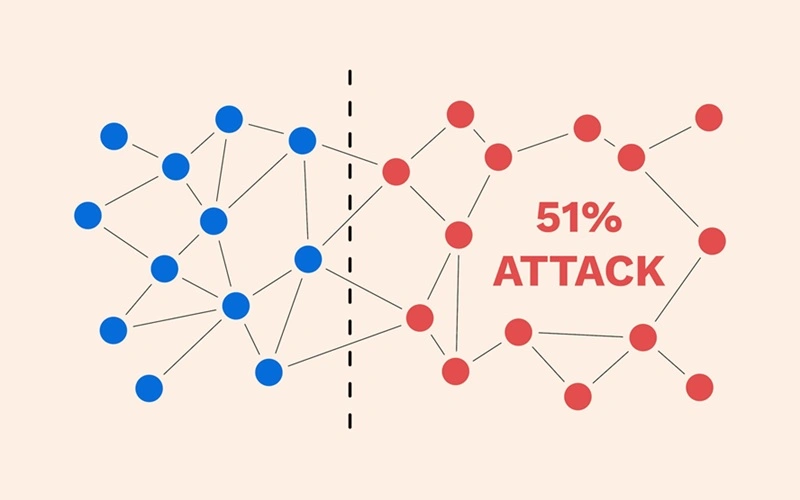
A 51% attack is a blockchain consensus attack in which an attacker or coordinated group gains enough control over a network’s consensus mechanism to influence which version of the blockchain is accepted. On a Proof-of-Work (PoW) blockchain such as Bitcoin, this generally means gaining majority control of the network’s hashing […]
Year: 2025

Smart contracts are a core component of blockchain and decentralized applications, allowing agreements and transactions to execute automatically without a traditional intermediary. However, vulnerabilities in smart contract code can lead to unauthorized access, financial losses, data manipulation, and other serious security problems. Because blockchain transactions are generally irreversible and deployed […]
Smart contracts can automate actions on a blockchain when specified conditions are met. But code that executes automatically is not automatically a complete or legally enforceable contract. Legal risk can arise when the code, written agreement, parties’ intentions, or applicable law do not align. This guide covers common legal issues […]
The concept of “intents” is emerging as a powerful new paradigm in Web3, with the potential to fundamentally redefine the user experience. Instead of the current model, which requires users to act as a programmer and dictate the step-by-step “how” of a transaction, intents allow users to simply express their […]
In the world of blockchain, a fundamental shift is underway from “monolithic” to “modular” architectures. This new paradigm promises to solve the long-standing blockchain trilemma—the challenge of balancing scalability, security, and decentralization—by specializing different network functions into separate, interconnected layers. Monolithic vs. Modular Architecture To understand modular blockchains, it’s essential […]
A Decentralized Physical Infrastructure Network (DePIN) is a blockchain-based framework that uses token incentives to encourage individuals to build, maintain, and operate physical infrastructure. Instead of relying on a centralized company to create a network, DePIN leverages a community-driven, bottom-up approach to build a shared, open-source network for services like […]
Post-Quantum Cryptography (PQC) is the development of cryptographic algorithms designed to be secure against attacks by future quantum computers. These new algorithms are crucial for blockchains because the cryptographic methods they currently rely on, specifically public-key cryptography like RSA and Elliptic Curve Cryptography (ECC), are vulnerable to a quantum computer […]
Federated learning is a machine-learning approach in which multiple participants train a shared model using locally held data rather than routinely pooling all raw training records in one central database. Blockchain can sometimes support coordination, audit trails, and incentives across organizations, but it does not automatically make federated learning private, […]


