
Substrate is a modular framework for building blockchain networks. It lets developers assemble runtime logic and infrastructure components rather than writing every blockchain feature from scratch. It is closely associated with the Polkadot ecosystem, but a Substrate-based chain’s architecture, governance, security, and interoperability depend on the specific implementation and how […]
The Cosmos SDK is an open-source framework for building application-specific blockchains. Instead of requiring every team to write a blockchain from the ground up, it provides reusable components for core functions such as accounts, transactions, governance, staking, and token transfers. Developers can combine and customize modules to create a chain […]
Flare is a blockchain network designed to support smart-contract applications that can use data from outside their own chain and interact with other blockchain ecosystems. These capabilities are useful because smart contracts normally cannot independently verify arbitrary real-world information. Data infrastructure can make external information available to applications, but it […]

Blockchain technology is designed to provide transparency, integrity, and resistance to unauthorized changes. But a blockchain is not automatically secure simply because it uses cryptography or decentralization. Blockchain security risks can exist at almost every layer of a blockchain ecosystem, including the consensus mechanism, network, wallets, smart contracts, exchanges, bridges, […]
Blockchain scams exploit the speed of digital transfers, the complexity of crypto tools, and the fact that many transactions cannot easily be reversed. Fraudsters may impersonate exchanges, create fake investment platforms, promote counterfeit tokens, send phishing links, or pressure people into revealing wallet recovery phrases. The safest approach is to […]
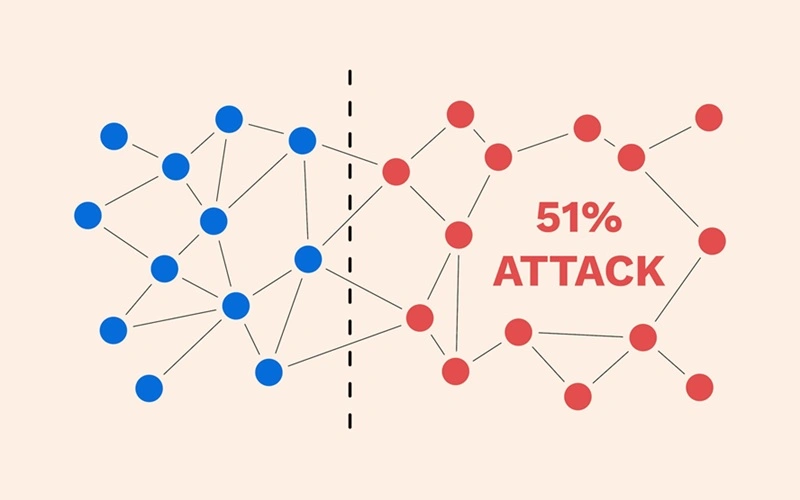
A 51% attack is a blockchain consensus attack in which an attacker or coordinated group gains enough control over a network’s consensus mechanism to influence which version of the blockchain is accepted. On a Proof-of-Work (PoW) blockchain such as Bitcoin, this generally means gaining majority control of the network’s hashing […]

Smart contracts are a core component of blockchain and decentralized applications, allowing agreements and transactions to execute automatically without a traditional intermediary. However, vulnerabilities in smart contract code can lead to unauthorized access, financial losses, data manipulation, and other serious security problems. Because blockchain transactions are generally irreversible and deployed […]
Smart contracts can automate actions on a blockchain when specified conditions are met. But code that executes automatically is not automatically a complete or legally enforceable contract. Legal risk can arise when the code, written agreement, parties’ intentions, or applicable law do not align. This guide covers common legal issues […]
Private keys are the cryptographic secrets that authorize control over blockchain assets and accounts. If another person obtains a private key or wallet recovery phrase, they may be able to transfer funds without the owner’s permission. Unlike a conventional bank payment, a confirmed blockchain transaction is often difficult or impossible […]
The concept of “intents” is emerging as a powerful new paradigm in Web3, with the potential to fundamentally redefine the user experience. Instead of the current model, which requires users to act as a programmer and dictate the step-by-step “how” of a transaction, intents allow users to simply express their […]


