
The use of Bitcoin and other cryptocurrencies has raised several ethical concerns and implications. Here are some of the most significant ethical issues: Lack of Regulation: Bitcoin’s decentralized nature means that it operates outside the traditional financial system, which raises concerns about regulatory oversight and law enforcement. This lack of […]
Year: 2024
Cryptocurrency crimes have become a significant concern in financial markets, with various types of illicit activities being perpetrated using cryptocurrencies such as Bitcoin, Ethereum, and others. Here are some common types of cryptocurrency crimes: Fraudulent schemes: Criminals use cryptocurrencies to perpetrate fraudulent schemes, such as Ponzi schemes, pyramid schemes, and […]
Cryptocurrency Adoption in Africa: Trends, Benefits & Challenges Cryptocurrency adoption in Africa has become an important development in the global digital economy. Across the continent, individuals, businesses, entrepreneurs, and financial technology companies are exploring how Bitcoin, stablecoins, and other digital assets can support payments, savings, international transfers, and access to […]

Bitcoin transactions are not immune to various threats, and understanding these threats is crucial for maintaining the security and integrity of the Bitcoin ecosystem. Here are some of the most significant aspects of Bitcoin transaction threats: Double Spending: One of the most common threats to Bitcoin transactions is double spending, […]
Cryptocurrency, also known as digital or virtual currency, has been gaining popularity in recent years, and its impact on the banking industry is significant. Here are some of the key ways in which cryptocurrency is affecting the banking industry: New Payment Methods: Cryptocurrencies like Bitcoin, Ethereum, and others are creating […]
Bitcoin, the first and most well-known cryptocurrency, has both advantages and disadvantages. Here are some of the main ones: Advantages: Decentralized and Secure: Bitcoin is a decentralized system, meaning that there is no central authority controlling it. Transactions are recorded on a public ledger called the blockchain, making it virtually […]

Cryptocurrency is a type of digital or virtual currency that uses cryptography for security, making it difficult to counterfeit or double-spend. Unlike traditional currencies, cryptocurrencies are decentralized and typically operate on technology called blockchain, which is a distributed ledger enforced by a network of computers, often referred to as nodes. […]

Bitcoin and Ethereum are two of the most prominent cryptocurrencies, but they serve different purposes and have distinct features. Here’s a comparison highlighting their key differences: Purpose Bitcoin (BTC): Created in 2009 by an anonymous entity known as Satoshi Nakamoto, Bitcoin is primarily a digital currency designed to function as […]

Crypto futures trading allows traders to speculate on the future price of cryptocurrencies without necessarily owning the underlying asset. A futures contract is an agreement to buy or sell an asset at a predetermined price according to the terms of the contract. Cryptocurrency futures can be used to speculate on […]
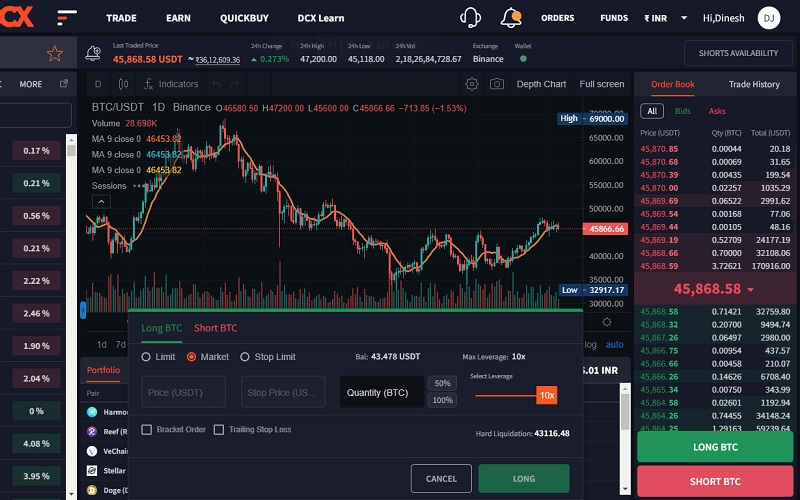
Crypto margin trading allows traders to control a larger cryptocurrency position than they could normally afford by using borrowed funds or leveraged exposure. The attraction is straightforward: leverage can increase the potential return from a relatively small amount of capital. But the same mechanism also increases losses. A relatively small […]


