
What Is the Metaverse? How It Works and How to Prepare for the Future
In its simplest definition, the Metaverse refers to a collection or network of persistent virtual worlds where people can interact, socialize, work, learn, create, play, and conduct transactions through digital environments.
Unlike the traditional internet, where much of our interaction happens through websites and two-dimensional screens, virtual worlds can provide more immersive experiences using technologies such as virtual reality (VR), augmented reality (AR), mixed reality (MR), 3D environments, artificial intelligence, and other forms of extended reality (XR).
The idea is not necessarily that everyone will live permanently inside one virtual world. Instead, the metaverse can be understood as an evolving collection of digital environments that connect people, content, services, and experiences.
What Is the Metaverse?
The term metaverse does not describe one specific application or website. It is a broad concept covering persistent and immersive digital environments.
The European Commission describes a metaverse as an interoperable network of virtual worlds, while virtual worlds are described as persistent, immersive environments that can support activities such as socializing, working, learning, creating, transactions, and entertainment.
Depending on the platform, users may enter these environments through a VR headset, AR glasses, computer, smartphone, game console, or other devices.
Metaverse Is More Than Virtual Reality
Virtual reality is an important part of the metaverse, but the two terms are not identical.
VR can place a user inside a fully virtual environment. AR adds digital information and objects to the physical environment. MR combines physical and digital elements in interactive ways. Together, these technologies are commonly grouped under extended reality (XR).
Some virtual worlds can also be accessed without a headset. A regular computer or smartphone may provide access, although the experience may be less immersive than using dedicated XR hardware.
 Metaverse Virtual World
In the Metaverse, You Create and Share Content
A metaverse can be thought of as a real-time digital environment where multiple users can interact with one another and with digital objects.
One of the important ideas behind virtual worlds is user-generated content. Users may be able to create environments, avatars, objects, experiences, games, events, artwork, businesses, and other forms of digital content.
This makes the concept different from a traditional online game in which most of the environment is created and controlled by the developer.
Modern virtual worlds can combine social interaction, entertainment, education, commerce, collaboration, and creativity. This is one reason the metaverse has attracted interest from technology companies, creators, businesses, educators, and developers.
The Metaverse and New Opportunities for Creators
The internet has already created opportunities for people to publish content, start businesses, build communities, and reach audiences without relying entirely on traditional intermediaries.
Virtual worlds could extend some of these opportunities into more immersive environments.
Creators may be able to design:
- 3D environments
- Digital artwork
- Virtual clothing and accessories
- Avatars
- Games and interactive experiences
- Educational environments
- Virtual events
- Digital products and services
This does not mean every virtual-world project will succeed. Like any emerging technology, the metaverse includes technical, economic, security, privacy, and adoption challenges.
Living and Working in Virtual Worlds
One of the most discussed applications of the metaverse is remote collaboration.
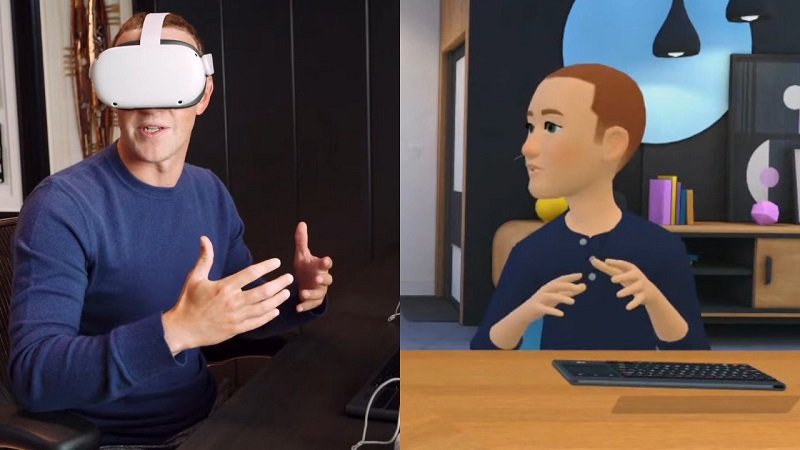
Imagine joining a virtual office where participants appear as avatars, interact with shared 3D objects, attend presentations, and collaborate on virtual workspaces.
This could complement existing tools such as video conferencing rather than immediately replacing them.
Virtual worlds can also be used for training, education, simulations, design, healthcare applications, industrial collaboration, entertainment, and other activities. The European Commission identifies applications across areas including education, healthcare, manufacturing, art, design, and industry.
Technology Behind the Metaverse
The metaverse is not based on one technology. It is an ecosystem that can combine several technologies.
Virtual Reality (VR)
VR uses immersive headsets and tracking systems to place users inside a computer-generated environment.
Augmented Reality (AR)
AR overlays digital information or objects onto the physical environment. Smartphones, tablets, and smart glasses can be used for different AR experiences.
Mixed Reality (MR)
Mixed reality combines physical and digital environments and can allow digital objects to interact with the user’s surroundings.
Artificial Intelligence
AI can support virtual worlds through conversational agents, automated characters, content generation, personalization, language processing, recommendation systems, and other applications.
3D Graphics and Game Engines
Three-dimensional graphics and real-time rendering are fundamental to many virtual-world experiences. Game engines and related development tools can be used to create interactive environments and simulations.
Blockchain
Blockchain can be used in some virtual-world ecosystems to represent digital assets, record transactions, and support certain ownership or transfer mechanisms.
However, blockchain is not a requirement for every metaverse or virtual world. Many virtual environments operate using conventional centralized infrastructure.
If you are new to blockchain technology, you can learn the fundamentals in our guide to what blockchain is and how blockchain technology works.
Digital Assets and NFTs
Some virtual-world platforms use digital assets such as NFTs to represent unique items, artwork, collectibles, avatars, or other objects.
An NFT can provide a blockchain-based record associated with a digital asset, but owning an NFT does not automatically mean owning the copyright or every legal right associated with the underlying content.
Learn more in our guide to what NFTs are and how non-fungible tokens work.
 What Is the Metaverse and How Does It Work?
Can You Live in the Metaverse?
The phrase “live in the Metaverse” is useful when describing the concept, but it should not be taken literally.
People are likely to continue living in the physical world while using virtual environments for specific activities.
For example, someone could live in a small town and use virtual worlds to:
- Attend an online class
- Meet colleagues
- Visit a virtual museum
- Attend an event
- Play games
- Meet friends
- Design products
- Participate in virtual communities
In this sense, the metaverse could become another layer of digital interaction rather than a replacement for physical life.
Metaverse as a Business Opportunity
The metaverse can create new possibilities for businesses, but companies should focus on useful experiences rather than simply entering a virtual world because it is a trend.
Potential business applications include:
- Virtual showrooms
- Product demonstrations
- Virtual conferences
- Training and education
- 3D product design
- Virtual customer support
- Entertainment
- Digital commerce
- Advertising
- Remote collaboration
Virtual worlds can also act as experimental environments where businesses test designs, workflows, customer experiences, and other ideas before implementing them in the physical world.
What Is the Metaverse Economy?
The term metaverse economy generally refers to the economic activity that takes place around virtual environments.
This can include digital goods, services, subscriptions, virtual events, advertising, games, creator economies, software, virtual experiences, and in some ecosystems blockchain-based assets.
Virtual items can have economic value because people may be willing to pay for functionality, entertainment, identity, customization, access, scarcity, or social status.
However, the value of a digital item is not guaranteed. Virtual assets can lose demand, platforms can change their rules, and projects can disappear.
Metaverse Jobs and Careers
The growth of virtual worlds can create demand for a wide range of technical and creative skills.
Potential roles include:
- 3D designers
- Game developers
- Virtual-world developers
- XR developers
- Avatar designers
- 3D artists
- UX and UI designers
- Community managers
- Digital marketers
- Blockchain developers
- Security specialists
- Virtual-event producers
The opportunities are not limited to programmers. The European Commission also highlights the importance of creative artists, designers, engineers, developers, and people with business skills for the broader XR ecosystem.
How Can You Prepare for the Metaverse?
You do not need to buy expensive equipment or purchase virtual land to prepare for the future of virtual worlds.
1. Learn the Technology
Start by understanding basic concepts such as VR, AR, MR, XR, 3D environments, avatars, digital identity, blockchain, NFTs, and virtual economies.
2. Develop Digital Skills
Skills in 3D design, programming, game development, digital marketing, content creation, cybersecurity, and user experience can become useful as virtual environments develop.
3. Understand Digital Identity
Your avatar and digital identity may become increasingly important in virtual environments.
Users should understand what information platforms collect, how accounts are protected, and how identity is represented online.
Digital identity is particularly important because avatars can potentially be hacked or impersonated, and users may interact with both humans and AI-controlled characters.
4. Learn About Privacy and Security
Virtual worlds can introduce privacy and cybersecurity challenges involving accounts, avatars, payments, personal information, biometric information, and digital assets.
Use strong passwords, enable multi-factor authentication where available, protect wallet credentials, and be careful when interacting with unfamiliar links or applications.
5. Understand Digital Assets
If you use a virtual world that supports cryptocurrencies or NFTs, understand how wallets, transactions, private keys, and digital ownership work before spending money.
Our article about NFTs and non-fungible tokens provides a useful introduction to this area.
6. Focus on Useful Applications
Rather than asking whether the metaverse will replace the internet, a more practical question is: What can virtual worlds help us do better?
Education, training, design, collaboration, entertainment, healthcare simulations, and industrial applications are examples where immersive technologies can provide practical benefits.
Risks and Challenges of the Metaverse
The metaverse also introduces important challenges.
Privacy
Immersive devices and applications can potentially process more information about users and their environments than traditional websites.
Cybersecurity
Virtual accounts, wallets, digital assets, avatars, and connected devices can become targets for attackers.
Digital Identity
Users need ways to protect their identities and prevent impersonation or unauthorized access.
Interoperability
One of the major challenges is allowing identities, assets, and experiences to work across different platforms. Not every virtual world uses the same standards or technology.
Accessibility
Virtual-world experiences should be designed so that people with different abilities can participate. Accessibility can include alternative control methods, voice interfaces, visual assistance, and other adaptations.
Economic Risk
Virtual assets and blockchain-based assets can be highly volatile. Users should not assume that virtual land, NFTs, tokens, or other digital items will automatically increase in value.
Metaverse and Blockchain: Are They the Same?
No. The metaverse and blockchain are different concepts.
Metaverse: A broad concept involving virtual worlds and immersive digital experiences.
Blockchain: A technology for maintaining shared records across a network using cryptography and consensus mechanisms.
Blockchain can be used inside some virtual-world ecosystems for digital assets, transactions, identity-related systems, or decentralized applications, but a virtual world does not need blockchain technology to exist.
You can learn more about blockchain fundamentals in our article What Is Blockchain?.
What Will the Future of the Metaverse Look Like?
No one can predict exactly what the metaverse will look like in the future.
Instead of one enormous virtual universe replacing the physical world, development may result in many interconnected or independent virtual worlds designed for different purposes.
Some may focus on gaming. Others may specialize in education, business, healthcare, entertainment, manufacturing, social interaction, or digital commerce.
The European Commission’s current work on virtual worlds also focuses on applications across multiple sectors and on making these environments open, secure, trustworthy, and inclusive.
Frequently Asked Questions About the Metaverse
What is the Metaverse?
The metaverse is a broad concept involving persistent virtual worlds and immersive digital environments where people can interact, work, learn, socialize, create, and play.
Is the Metaverse the same as VR?
No. VR is one technology used to create immersive experiences. The metaverse is a broader concept that can include VR, AR, MR, computers, smartphones, game consoles, blockchain, AI, and other technologies.
Do I need a VR headset to enter the Metaverse?
No. Some virtual worlds can be accessed using computers or smartphones. A VR headset can provide a more immersive experience, but it is not required for every virtual world.
Is blockchain required for the Metaverse?
No. Blockchain can support digital assets, transactions, and decentralized applications in some virtual worlds, but many virtual environments operate without blockchain.
Can I make money in the Metaverse?
There are potential opportunities involving content creation, software development, digital services, virtual events, gaming, design, and other activities. However, buying virtual assets or cryptocurrencies is not a guaranteed way to make money and can involve significant risk.
What skills are useful for the Metaverse?
Useful skills can include programming, 3D design, game development, XR development, cybersecurity, digital marketing, content creation, UX design, and business development.
Conclusion
The Metaverse is best understood not as a single virtual planet where everyone will eventually live, but as a broad and evolving concept involving persistent virtual worlds and immersive digital experiences.
VR, AR, MR, AI, 3D graphics, blockchain, digital assets, and high-speed connectivity can all contribute to different parts of this ecosystem.
The most practical way to prepare is not simply to buy virtual assets or expensive hardware. Instead, learn the technologies, develop useful digital skills, understand digital identity and cybersecurity, and look for applications where immersive environments solve real problems.
The future of virtual worlds is still developing. What matters most is understanding both their opportunities and their limitations.



One thought on “What Is the Metaverse? How It Works and How to Prepare for the Future”