Gavin Wood: From Ethereum Development to the Creation of Web3
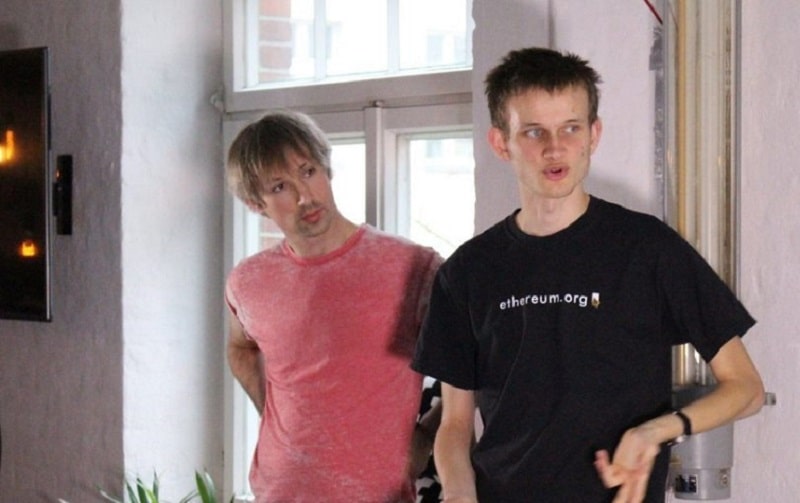
Many people associate Ethereum primarily with Vitalik Buterin, but he was not the only person involved in the project’s early development. Gavin Wood was one of Ethereum’s co-founders and played an important role in turning the original Ethereum concept into working software.
Wood later pursued other projects in the blockchain industry, including Polkadot and Kusama, and became one of the prominent figures associated with the broader Web3 movement.
Who Is Gavin Wood?
Gavin Wood is a computer scientist and blockchain developer who became involved with Ethereum during its earliest development period. He is particularly known for his technical contributions to Ethereum, including the Ethereum Yellow Paper and the development of Solidity, the programming language designed for writing Ethereum smart contracts.
He later co-founded Parity Technologies and developed the ideas that eventually became Polkadot, a multi-chain protocol designed to support interoperability between different blockchain networks.
Polkadot’s original technical vision described a heterogeneous multi-chain framework intended to address issues including blockchain scalability and interoperability.
How Did Gavin Wood Become Interested in Cryptocurrency?
Wood has described himself as someone deeply interested in technology and programming from an early age. His interest in computer science eventually led him toward distributed systems and, later, blockchain technology.
He first became acquainted with Bitcoin around 2011. His interest was not limited to Bitcoin as a digital currency. What attracted him was the possibility of using software and cryptography to create new ways for people and organizations to interact.
The early Bitcoin ecosystem demonstrated to Wood that software could potentially be used to create decentralized systems without relying entirely on traditional intermediaries.
How Gavin Wood Joined the Ethereum Project
After becoming interested in Bitcoin and cryptocurrency, Wood began looking for opportunities to work in the emerging blockchain industry.
He eventually met people working on Ethereum and joined Vitalik Buterin and other early contributors in developing the project.
Ethereum was intended to go beyond Bitcoin’s primary use as a digital currency by providing a programmable blockchain on which developers could create decentralized applications and smart contracts.
Wood’s programming and systems background made him an important contributor to the technical development of Ethereum.
Gavin Wood and the Ethereum Yellow Paper
One of Gavin Wood’s most important contributions to Ethereum was the Ethereum Yellow Paper.
While Ethereum’s original White Paper described the project’s goals and general architecture, the Yellow Paper provided a more formal technical specification of the Ethereum protocol.
This helped developers understand the underlying rules and computational model of Ethereum and provided a foundation for implementing Ethereum clients.
Wood’s work therefore went beyond simply participating in the project’s development. He helped formalize the technical design that developers could use to build Ethereum implementations.
Gavin Wood and Solidity
Gavin Wood is also closely associated with Solidity, the programming language widely used for developing smart contracts on Ethereum.
Smart contracts allow developers to create programs that execute according to predefined rules on a blockchain.
This concept became one of Ethereum’s defining characteristics and helped establish the foundation for decentralized applications, decentralized finance, tokenization, NFTs, and many other blockchain-based applications.
Understanding smart contracts is therefore essential for understanding why Ethereum became more than simply a cryptocurrency network.
For a deeper look at the security side of smart contracts, see our guide to smart contract auditing.
Why Was Ethereum Different From Bitcoin?
Bitcoin introduced a decentralized digital currency based on blockchain technology and Proof of Work. Ethereum expanded the concept by providing a general-purpose programmable blockchain.
| Bitcoin | Ethereum |
|---|---|
| Primarily designed as decentralized digital money | Designed as a programmable blockchain platform |
| Uses Bitcoin Script for transaction conditions | Supports general-purpose smart contracts |
| Bitcoin’s ecosystem focuses heavily on payments and monetary applications | Supports applications, tokens, DeFi, NFTs and other programmable systems |
This programmability became one of the major reasons Ethereum attracted developers and helped expand the blockchain ecosystem beyond cryptocurrency payments.
You can learn more about the underlying technology in our guide to what blockchain technology is and how it works.
Gavin Wood’s Vision for Blockchain Technology
Wood’s interest in blockchain technology was not limited to creating another cryptocurrency.
He viewed decentralized technologies as a potential foundation for new types of digital organizations, applications, and social structures.
The broader idea was that blockchain networks could allow people to interact through software and cryptographic protocols rather than depending exclusively on centralized intermediaries.
This vision later became closely associated with the term Web3.
From Ethereum to Polkadot
After his work on Ethereum, Gavin Wood went on to develop new blockchain infrastructure.
One of the most significant projects associated with him is Polkadot.
Polkadot was designed around the idea of a multi-chain ecosystem in which different blockchain systems could operate and communicate within a shared framework.
The original Polkadot vision described a heterogeneous multi-chain architecture designed to improve scalability and interoperability while allowing different types of blockchain networks to participate in the same broader system.
What Is Polkadot?
Polkadot is a blockchain protocol designed to provide interoperability and shared infrastructure for multiple blockchain networks.
Rather than requiring every blockchain to operate as an isolated system, Polkadot’s architecture was designed to allow different chains to participate in a connected ecosystem.
This approach is related to Wood’s broader interest in solving limitations associated with traditional blockchain architectures, particularly scalability, interoperability, and the ability to support different application requirements.
Polkadot’s technical direction has also evolved over time. Its current documentation describes a broader move from a chain-centric model toward an application-centric architecture.
What Is Kusama?
Gavin Wood also founded Kusama, which is closely related to the Polkadot ecosystem.
Kusama was designed as a more experimental environment where new ideas, technologies, and governance approaches could be tested before or independently of their use in Polkadot.
This experimental approach made Kusama an important part of the development philosophy surrounding the Polkadot ecosystem.
Gavin Wood and Web3
Gavin Wood is one of the people strongly associated with the development and popularization of the Web3 concept.
Web3 generally refers to a vision of a more decentralized internet in which users can interact with applications and digital assets through open protocols and blockchain-based infrastructure.
Unlike the traditional web, where many major services are controlled by centralized companies, Web3 aims to give users greater direct control over digital assets, identities, and interactions.
Blockchain technology is an important part of this vision, although Web3 is broader than blockchain alone.
Why Gavin Wood’s Work Matters to Web3
Wood’s work has influenced several important areas of blockchain development:
- Smart contract platforms
- Blockchain protocol design
- Programming languages for blockchain applications
- Interoperability between blockchain networks
- Multi-chain architectures
- Decentralized applications
- Web3 infrastructure
His career therefore provides an interesting example of how blockchain technology developed from the original cryptocurrency concept into a much broader software and infrastructure ecosystem.
Ethereum, Polkadot and the Evolution of Web3
Ethereum and Polkadot represent different stages of Wood’s work in blockchain technology.
Ethereum demonstrated that a blockchain could become a programmable platform for decentralized applications. Polkadot pursued a different architectural approach focused on interoperability and multi-chain systems.
These developments contributed to the broader evolution of blockchain from a technology primarily associated with digital currencies into an infrastructure layer for applications, assets, and decentralized services.
Gavin Wood’s Continuing Work in Blockchain
Wood has continued working on blockchain infrastructure and protocol research after his early Ethereum contributions.
The Polkadot ecosystem continues to develop its architecture, including work around scalable computation and new virtual-machine approaches.
For example, current Polkadot documentation describes support for Ethereum-compatible smart contracts as well as PolkaVM, a RISC-V-based execution environment intended to support high-performance applications.
This illustrates how the technical ideas associated with Wood’s work have continued to evolve beyond the original Ethereum architecture.
Gavin Wood and the Future of Blockchain
It is difficult to know exactly how blockchain technology will develop over the coming decades. However, Gavin Wood’s career illustrates several major transitions in the industry.
He moved from the early Bitcoin and Ethereum environment toward research and development focused on programmable blockchains, interoperability, multi-chain systems, and Web3 infrastructure.
The broader industry has similarly moved from asking whether digital currencies can work toward questions about decentralized applications, blockchain interoperability, digital ownership, smart contracts, and decentralized infrastructure.
Conclusion
Gavin Wood is an important figure in the history of Ethereum and the broader blockchain industry.
His involvement with Ethereum helped turn the project’s original ideas into a more formal technical and programmable blockchain platform. His work on the Ethereum Yellow Paper and Solidity contributed to the development environment that enabled developers to build smart contracts and decentralized applications.
Later, through Polkadot, Kusama, and his work on Web3 infrastructure, Wood pursued a broader vision of interconnected blockchain networks and decentralized digital systems.
His career shows how the blockchain industry evolved from the early idea of decentralized digital money toward programmable networks, multi-chain architectures, and the broader Web3 ecosystem.
Frequently Asked Questions About Gavin Wood
Who is Gavin Wood?
Gavin Wood is a computer scientist, blockchain developer, and Ethereum co-founder who later founded or co-founded projects including Polkadot and Kusama and became closely associated with the Web3 movement.
What did Gavin Wood do for Ethereum?
Wood contributed significantly to Ethereum’s early technical development. He wrote the Ethereum Yellow Paper and was closely associated with the development of Solidity and the Ethereum client software.
Did Gavin Wood create Ethereum?
Gavin Wood was one of Ethereum’s co-founders and an important early technical contributor. Ethereum was developed by a broader group of founders and contributors rather than being created by a single person.
What is Gavin Wood known for?
He is particularly known for his work on Ethereum, Solidity, the Ethereum Yellow Paper, Polkadot, Kusama, and the broader Web3 concept.
What is Polkadot?
Polkadot is a blockchain protocol designed around interoperability and a multi-chain architecture. Its original technical vision focused on connecting different blockchain systems within a shared framework.
What is Web3?
Web3 is a broad term for a vision of a more decentralized internet built around open protocols, blockchain networks, digital assets, smart contracts, and user-controlled digital interactions.