
What Is Dogecoin? How It Works and How It Differs From Bitcoin
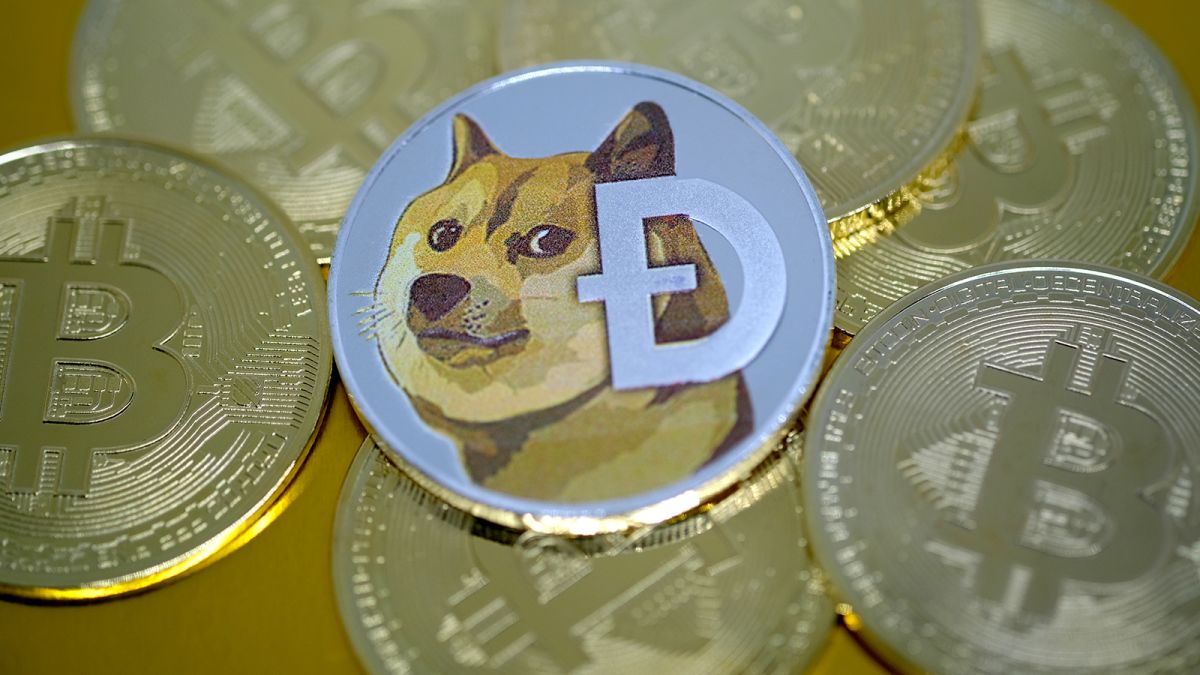
Dogecoin is a peer-to-peer, open-source cryptocurrency. It was created in 2013 as a lighthearted alternative to the growing number of digital currencies at the time, using the Shiba Inu dog as its logo and brand. What initially started as a joke eventually developed into a cryptocurrency with its own blockchain, community, users, and real-world applications.
Dogecoin was launched in December 2013 by software developers Billy Markus and Jackson Palmer. Its underlying technology was derived from Litecoin, and Dogecoin uses a Scrypt-based Proof of Work consensus system.
Dogecoin differs from Bitcoin in several important ways, including its mining algorithm, block time, monetary supply model, and original purpose. Understanding these differences can help explain why Dogecoin developed a different role within the cryptocurrency ecosystem.
Dogecoin quickly attracted its own community of users. In its early days, online communities, including Reddit users, played an important role in spreading awareness of the cryptocurrency.
Like other cryptocurrencies, Dogecoin can be transferred between compatible wallets and traded through cryptocurrency exchanges that support it. Users can also store Dogecoin in a compatible cryptocurrency wallet.
What Is Dogecoin?
Dogecoin is a decentralized cryptocurrency that operates on its own blockchain network. Like other Proof of Work cryptocurrencies, transactions are verified by network participants and recorded in blocks.
Dogecoin was inspired by Bitcoin and Litecoin, but its developers made several technical and economic choices that distinguish it from Bitcoin.
One of the most important differences is its monetary supply. Bitcoin has a maximum supply of 21 million coins, while Dogecoin does not have a fixed maximum supply. New Dogecoin continues to be issued according to the network’s protocol.
Dogecoin is therefore often described as an inflationary cryptocurrency because its supply increases over time. This differs from Bitcoin’s fixed maximum supply and decreasing issuance rate.
Dogecoin History
Initially, Jackson Palmer, a product manager at Adobe in Sydney, Australia, created the idea of Dogecoin in 2013 as a humorous response to the growing interest in cryptocurrencies and the speculation surrounding digital currencies.
Palmer’s early social media activity about the idea attracted attention. He subsequently registered the Dogecoin.com domain, helping turn the joke into a more concrete cryptocurrency project.
Meanwhile, Billy Markus, a software developer at IBM, was interested in creating his own cryptocurrency. After hearing about Dogecoin, Markus contacted Palmer and received permission to develop the software behind the project.
The collaboration between Palmer and Markus resulted in the launch of Dogecoin on December 6, 2013.
Dogecoin’s code was based on Luckycoin, which itself was derived from Litecoin. The project therefore shares some of its technical heritage with Litecoin and other Scrypt-based cryptocurrencies.
Dogecoin quickly developed a community around its humorous identity and online culture. Despite its origins as a joke, it became a functioning cryptocurrency with an active network and ecosystem.

Dogecoin and Bitcoin: What Are the Differences?
Dogecoin and Bitcoin are both cryptocurrencies that use blockchain technology and Proof of Work, but they are not identical.
One of the most important differences is their hashing algorithm. Bitcoin uses SHA-256 as part of its Proof of Work system, while Dogecoin uses Scrypt.
It is more accurate to describe SHA-256 and Scrypt as cryptographic hashing algorithms rather than encryption methods. They are used as part of the mining and network-security mechanisms of the respective cryptocurrencies.
Dogecoin vs Bitcoin: Main Differences
| Feature | Dogecoin | Bitcoin |
|---|---|---|
| Launch | 2013 | 2009 |
| Creators | Jackson Palmer and Billy Markus | Satoshi Nakamoto |
| Consensus | Proof of Work | Proof of Work |
| Mining algorithm | Scrypt | SHA-256 |
| Maximum supply | No fixed maximum supply | 21 million BTC |
| Block time | Approximately 1 minute | Approximately 10 minutes |
| Original concept | Lighthearted cryptocurrency and online community project | Decentralized peer-to-peer digital currency |
These differences have practical consequences. Dogecoin’s shorter block time allows blocks to be produced more frequently than Bitcoin’s typical block interval. Bitcoin, meanwhile, has a much more limited monetary supply and a different mining ecosystem.
If you want to understand Bitcoin in more detail, see our article about Bitcoin and Bitcoin Cash and their differences.
Dogecoin’s Supply Model
One of the biggest differences between Dogecoin and Bitcoin is their supply structure.
Bitcoin has a maximum supply of 21 million coins. Its issuance schedule is designed so that the number of new bitcoins created through mining decreases over time through periodic halving events.
Dogecoin does not have a fixed maximum supply. New Dogecoin is issued according to the network’s protocol, meaning that its total supply can continue to increase.
This does not mean that Dogecoin can be created without limits or without rules. New coins are issued according to the protocol and block rewards of the Dogecoin network.
The different supply models are an important part of the economic distinction between the two cryptocurrencies.
Dogecoin and Bitcoin Mining
Both Dogecoin and Bitcoin use Proof of Work mining, but they use different hashing algorithms.
Bitcoin uses SHA-256, while Dogecoin uses Scrypt.
In Proof of Work, miners use computing resources to compete to produce valid blocks according to the rules of the network. When a valid block is accepted, the miner receives a block reward and transaction fees according to the protocol.
Dogecoin produces blocks much more frequently than Bitcoin. Dogecoin’s target block time is approximately one minute, while Bitcoin’s target is approximately ten minutes.
Dogecoin also supports merged mining with Litecoin. This allows miners participating in Litecoin’s Scrypt Proof of Work ecosystem to contribute to the security of both networks under the appropriate mining arrangement.
If you are interested in cryptocurrency mining more generally, our guide to Bitcoin mining provides additional background on how cryptocurrency mining works.
How Does Dogecoin Work?
Dogecoin operates through a decentralized blockchain network.
When a user sends Dogecoin, the transaction is broadcast to the network. Participating nodes verify the transaction according to the rules of the blockchain.
Valid transactions can then be included in a block by miners. The Proof of Work process is used to determine which miner successfully produces the next valid block.
Once the block is accepted by the network, it becomes part of the Dogecoin blockchain and the transaction receives additional confirmations as more blocks are added.
The process can be summarized as:
- A user creates and signs a Dogecoin transaction.
- The transaction is broadcast to the Dogecoin network.
- Nodes validate the transaction according to the network’s rules.
- Miners collect valid transactions into a block.
- Proof of Work is used to produce a valid block.
- The accepted block is added to the blockchain.
- Additional blocks provide further confirmations.
What Is Dogecoin Used For?
Dogecoin can be used for several purposes depending on the user and the services that support it.
- Peer-to-peer payments: Users can send Dogecoin directly to compatible wallets.
- Online tipping: Dogecoin has historically been used for tipping content creators and community members.
- Transfers: Users can transfer Dogecoin between supported wallets and exchanges.
- Trading: Dogecoin can be traded against other cryptocurrencies or fiat currencies on exchanges that support it.
- Community projects: Dogecoin’s community has historically supported charitable and fundraising initiatives.
How to Buy and Sell Dogecoin
Dogecoin can be bought and sold through cryptocurrency exchanges and other platforms that support DOGE.
After purchasing Dogecoin, users generally have the option of keeping it on an exchange or transferring it to a compatible cryptocurrency wallet.
A cryptocurrency wallet provides a way to manage the private keys associated with a user’s digital assets. Users should carefully protect their private keys and recovery information because losing access to them can result in losing access to their cryptocurrency.
Before buying or selling any cryptocurrency, it is also important to understand the risks associated with cryptocurrency prices, exchanges, wallets, and private-key management.
Dogecoin vs Bitcoin: Which Is Faster?
Dogecoin has a shorter target block time than Bitcoin. Dogecoin targets approximately one-minute blocks, while Bitcoin targets approximately ten-minute blocks.
This means that Dogecoin can produce blocks more frequently. However, block time alone does not determine the complete user experience of a cryptocurrency transaction.
Confirmation requirements, network conditions, fees, wallet software, exchange policies, and other factors can affect how quickly a transaction becomes usable or considered final by a particular service.
Dogecoin vs Bitcoin: Which Has a Larger Supply?
Dogecoin has no fixed maximum supply, while Bitcoin has a maximum supply of 21 million BTC.
This is one of the fundamental economic differences between the two networks.
Bitcoin’s issuance decreases through scheduled halving events, while Dogecoin continues to issue new coins according to its protocol.
Dogecoin and the Cryptocurrency Community
One of Dogecoin’s most distinctive characteristics has always been its community-driven identity.
The cryptocurrency was created with a humorous concept and the Shiba Inu meme as its central visual identity. This helped Dogecoin develop a community that was different from many of the more technically or financially focused cryptocurrency projects.
Its early popularity was strongly influenced by online communities and social media. Over time, Dogecoin became more than the joke for which it was originally created and developed into a functioning cryptocurrency network.
Dogecoin and Bitcoin: Similarities
Although there are significant differences between Dogecoin and Bitcoin, they also share several characteristics.
- Both are decentralized cryptocurrencies.
- Both use blockchain technology.
- Both use Proof of Work.
- Both rely on cryptographic techniques.
- Both allow peer-to-peer transfers.
- Both can be stored in compatible cryptocurrency wallets.
- Both can be traded on cryptocurrency exchanges that support them.
Dogecoin and Bitcoin: Key Takeaway
Dogecoin and Bitcoin are both cryptocurrencies, but they were designed with different goals and have different technical and economic characteristics.
Bitcoin was introduced as a decentralized peer-to-peer digital currency and has a fixed maximum supply of 21 million coins. Dogecoin was introduced in 2013 as a lighthearted cryptocurrency project and uses Scrypt-based Proof of Work, a shorter target block time, and a monetary supply model without a fixed maximum supply.
These differences help explain why the two cryptocurrencies have developed different communities, mining ecosystems, and use cases.
Conclusion
Dogecoin started as a humorous cryptocurrency project inspired by the popular Shiba Inu meme, but it eventually developed into an established blockchain network with its own users, miners, community, and ecosystem.
Its technical foundation is related to Litecoin, and Dogecoin uses Scrypt-based Proof of Work. Its approximately one-minute target block time and lack of a fixed maximum supply distinguish it from Bitcoin, which uses SHA-256 Proof of Work, targets approximately ten-minute blocks, and has a maximum supply of 21 million BTC.
Understanding these differences is important for anyone learning about cryptocurrencies and blockchain technology. Dogecoin and Bitcoin demonstrate how different blockchain networks can use similar underlying concepts while making different choices about mining, supply, transaction processing, and network economics.
If you are continuing to learn about cryptocurrencies, you can also explore our article on Bitcoin vs Bitcoin Cash and our guide to what blockchain technology is and how it works.


One thought on “What Is Dogecoin? How It Works and How It Differs From Bitcoin”