What Is Tether (USDT)? How It Works, Reserves and Risks
2026 update: Tether (USDT) is a US-dollar-pegged stablecoin designed to maintain a value close to $1. It is widely used for cryptocurrency trading, payments, and transfers. However, USDT is not a bank deposit or government-issued dollar. Its value depends on the issuer’s reserve arrangements, market liquidity, redemption access, and the reliability of the blockchain network used.
Tether, commonly identified by the ticker USDT, is one of the most widely used stablecoins in the cryptocurrency market. It is designed to track the value of one US dollar, allowing users to hold and transfer a dollar-linked digital token across supported blockchain networks.
Unlike Bitcoin and many other cryptocurrencies, whose prices can change significantly, USDT aims to maintain a relatively stable market value. This makes it useful for traders who want to move out of volatile cryptocurrency positions without immediately converting their funds into traditional bank currency.
However, a stablecoin is not automatically risk-free. USDT depends on Tether as its issuer, the assets held in its reserves, the terms governing redemption, and the exchanges and blockchain networks through which users access it.
In this Poolyab guide, you will learn what Tether is, how USDT works, what supports its dollar peg, what its reserve disclosures show, how to buy and store it, and which risks you should understand before using it.
What Is Tether (USDT)?
Tether is a digital asset issuer and platform best known for USD₮, commonly called USDT. The token is designed to maintain a value equivalent to one US dollar. It is a centralized, reserve-backed stablecoin issued and administered by Tether.
A stablecoin is a cryptocurrency designed to maintain a relatively stable value by tracking an asset such as a national currency or a commodity. Different stablecoins use different mechanisms to pursue this goal. Some rely on reserves held by an issuer, while others use crypto collateral or algorithmic mechanisms.
USDT uses an issuer-managed reserve model. Tether reports that its reserves support the tokens in circulation. The company publishes information about its assets, liabilities, and reserve composition through its official transparency page.
USDT is not the US dollar itself. It is not issued by the US government, is not legal tender, and does not provide the same protections as an eligible insured bank deposit. A holder’s ability to redeem USDT directly with Tether is subject to the company’s terms, verification requirements, eligibility rules, minimum amounts, and fees.
Why do people use Tether?
USDT has several common uses in the cryptocurrency ecosystem:
- Cryptocurrency trading: Traders use USDT as a quote currency when buying and selling assets such as Bitcoin and Ethereum.
- Moving funds between exchanges: Users can transfer USDT between compatible platforms without converting to traditional currency at every step.
- Holding dollar-linked value: Some cryptocurrency users hold USDT to reduce their direct exposure to the price movements of more volatile digital assets.
- Payments and transfers: Individuals and businesses may use USDT to transfer value across borders where the token and relevant services are supported.
- Blockchain applications: Supported versions of USDT can be used in compatible wallets, exchanges, and decentralized finance applications.
These uses do not make USDT risk-free. Its market price can move away from $1, an exchange can suspend withdrawals, and a blockchain transfer can be lost if the wrong network or address is used.
Example: Using USDT during a cryptocurrency market decline
Imagine that a trader owns Bitcoin worth approximately $10,000. The trader sells the Bitcoin and receives around 10,000 USDT. The trader is no longer directly exposed to Bitcoin’s price movements for that portion of the portfolio.
If Bitcoin’s price subsequently falls, the trader may be able to use the USDT balance to buy Bitcoin at a lower price. However, this does not guarantee a profit. Trading fees, price slippage, taxes, market movements, and the USDT exchange rate can all affect the result.
USDT also has its own risks. If it trades below $1, the dollar value of the trader’s balance may be lower than expected.
How Does Tether Work?
USDT combines an issuer-managed token system with blockchain networks that record transactions. Understanding the difference between these two parts helps explain how the stablecoin operates.
1. Reserves support the dollar peg
Tether states that its tokens are backed by reserves intended to cover their value. These reserves are not necessarily made up entirely of cash held in ordinary bank accounts. Tether’s disclosures describe a portfolio that can include cash, cash equivalents, US Treasury bills, and other assets.
The reserve model is intended to support confidence in USDT and provide a basis for eligible customers to redeem tokens under Tether’s terms. However, the existence of reserves does not mean that every retail holder can immediately exchange USDT for dollars directly with the issuer.
To evaluate the reserve position, check Tether’s latest published information:
Tether’s official transparency and reserve disclosures.
Pay attention to the reporting date, total assets, total liabilities, the types of assets held, and the scope of the independent assurance report. A reserve report describes a particular reporting date. It does not guarantee that the market price will always remain exactly $1 or that every holder can redeem tokens immediately.
2. Tether issues and redeems USDT
Tether administers the issuance and redemption of USDT. In general, eligible customers can acquire tokens through the issuer’s services, while accepted tokens can be submitted for redemption under the applicable terms.
Issuance and redemption help adjust the amount of USDT in circulation. When new tokens are issued, the circulating supply can increase. When tokens are redeemed and removed from circulation, the supply can decrease.
Direct purchases and redemptions through Tether are subject to account verification, eligibility conditions, minimum transaction amounts, and fees. These requirements can make direct issuer services unsuitable for many small retail transactions.
For example, Tether’s published fee information currently lists a minimum direct acquisition or redemption amount of $100,000. Its published redemption fee is the greater of $1,000 or 0.1%, and a verification fee also applies. Always check the current terms before relying on these figures.
Official information:
Most individual users acquire USDT through cryptocurrency exchanges or other services rather than directly from Tether. The exchange’s trading price, withdrawal fees, deposit requirements, and redemption arrangements are separate from the issuer’s direct services.
3. Blockchain networks record USDT transfers
USDT is available on multiple blockchain networks. Each supported version uses the relevant network’s token standard and transaction system.
For example, Ethereum-based USDT follows the ERC-20 token standard, while Tron-based USDT follows the TRC-20 standard. These versions represent the same dollar-linked token but operate on different networks.
The blockchain records transfers and allows compatible wallets and applications to recognize token balances. Tether administers the token’s issuance and redemption, while the underlying blockchain processes transactions according to its protocol.
This means USDT combines a centralized issuer with transactions that can be recorded on public blockchains. It would be misleading to describe the entire system as fully decentralized simply because some transfers take place on decentralized networks.
4. USDT supply changes with issuance and redemption
Unlike Bitcoin, USDT does not have a fixed maximum supply determined by a mining schedule. Its circulating supply can expand or contract as tokens are issued, redeemed, or otherwise removed from circulation.
Supply changes should be considered alongside demand, market liquidity, and the issuer’s reserve disclosures. An increase in circulating supply does not, by itself, prove that the token is overvalued or that reserves are inadequate.
Tether Reserves: What Backs USDT?
Reserve quality and transparency are central to understanding USDT. Because the token is designed to track the US dollar, users need to consider the assets Tether reports holding, the liabilities associated with tokens in circulation, and the process through which eligible customers can redeem tokens.
What does Tether hold in its reserves?
Tether’s reported reserves can include several types of assets, such as:
- US Treasury bills: Short-term US government debt securities that form a major part of the reported reserve portfolio.
- Cash and bank deposits: Cash balances and deposits used as part of the reserve structure.
- Repurchase agreements and money-market-related holdings: Financial instruments that can provide liquidity and generate income.
- Precious metals: Tether has reported holdings of gold as part of its broader asset portfolio.
- Bitcoin and other investments: Tether has also disclosed certain other assets and investments. These are not the same as cash and should be evaluated according to their own risk characteristics.
The composition and value of reserves can change over time. Users should therefore avoid relying on an old article or historical reserve breakdown as if it were a current statement.
What did Tether report in its September 2026 reserve disclosure?
In its report for September 30, 2026, Tether reported approximately $191.45 billion in total assets and $183.50 billion in total liabilities. The report stated that assets exceeded liabilities by approximately $7.95 billion.
The reported liabilities included approximately $183.47 billion relating to digital tokens issued. Tether also reported direct and indirect holdings of US Treasury bills totaling approximately $132.4 billion.
These figures are a snapshot of the reported position on September 30, 2026. They should not be interpreted as live balances or as a guarantee of future market liquidity.
The quarterly reserve report was accompanied by an assurance report prepared by BDO. Tether also announced in August 2026 that KPMG had completed a full independent audit of its 2025 financial statements. A quarterly reserve attestation and a full financial-statement audit are different forms of reporting and should not be treated as interchangeable.
For the latest reporting date and documents, consult Tether’s official transparency page.
Does having reserves guarantee that USDT is safe?
No. Reserve disclosures are important, but they do not eliminate every risk. The value and liquidity of reserve assets, the issuer’s operations, legal obligations, redemption procedures, and market conditions all matter.
There is also a difference between reporting that assets exceed liabilities on a particular date and guaranteeing that every holder can immediately redeem tokens at any time. Direct redemption is subject to Tether’s terms and eligibility requirements, while most retail users depend on exchanges or other counterparties.
Which Blockchain Networks Support USDT?
USDT exists in different network-specific forms. Common examples include ERC-20 USDT on Ethereum and TRC-20 USDT on Tron. Tether also lists supported versions on other blockchain protocols.
Network support can change. Some networks that historically carried USDT are no longer supported for new issuance or direct redemption by Tether. Its published information states that it is no longer obligated to redeem USDT under its terms on certain legacy networks, including Omni, Bitcoin Cash SLP, Kusama, EOS, and Algorand, effective September 1, 2025.
Do not assume that a token remains supported simply because an old wallet, exchange, or article still lists it. Check the current information before making a transfer.
See Tether’s official supported protocols and integration guidelines for the current list.
ERC-20 USDT
ERC-20 USDT is issued on Ethereum. It can be held in compatible Ethereum wallets and used by supported applications. Transfers require Ethereum network fees, which are generally paid in ETH.
TRC-20 USDT
TRC-20 USDT is issued on the Tron network. It is commonly supported by exchanges and wallets. However, users should check the receiving service’s network support, withdrawal fees, and deposit requirements before sending tokens.
Why network selection matters
A wallet or exchange may support USDT on one network but not another. If the sending and receiving services do not support the same network and token version, a transfer may fail or become difficult or impossible to recover.
Before transferring USDT:
- Confirm the exact network selected by the sending service.
- Confirm that the receiving wallet or exchange supports USDT on that same network.
- Check the deposit address and any additional requirements shown by the receiving service.
- Review the network fee and minimum deposit amount.
- For a new destination, consider a small test transfer when the fees make it practical.
- Never share your wallet recovery phrase or private keys with anyone claiming to help with a transfer.
How to Buy Tether (USDT)
USDT is available through many cryptocurrency exchanges and other supported trading services. Availability, payment methods, fees, and legal requirements vary by country and provider.
A typical purchase process involves the following steps:
- Choose a reputable service. Check its operating status in your jurisdiction, security practices, withdrawal policies, and fee schedule.
- Complete verification if required. Some services require identity checks before allowing deposits, purchases, or withdrawals.
- Deposit funds. Depending on the service and your location, this may involve a bank transfer, card payment, or another supported method.
- Find the USDT trading pair. Check the quoted price, trading fee, and spread before placing an order.
- Choose where to store your USDT. You can leave it on a platform, subject to that platform’s risks, or withdraw it to a compatible wallet.
- Verify the network before withdrawing. Make sure the destination supports the exact network selected.
You can use CoinMarketCap’s Tether markets page to research exchanges and trading pairs. Treat listings as a starting point for research, not as an endorsement of every listed service.
Buying USDT through an exchange is not the same as purchasing it directly from Tether. Direct purchases from Tether are subject to its own eligibility, verification, minimum transaction, and fee requirements.
USDT Wallets: How to Store Tether
A cryptocurrency wallet lets you manage the keys used to access tokens on a blockchain. Some wallets are software applications, while hardware wallets store private keys in a dedicated device. Exchanges may also hold USDT on behalf of customers, but this means the customer depends on the platform’s custody and withdrawal arrangements.
The most suitable wallet depends on which USDT network you use, how often you transact, your security needs, and whether you prefer self-custody or a custodial service.
Examples of wallets to research
The following are examples, not a guarantee that every product supports every USDT network. Confirm current support directly with the wallet provider before depositing funds.
| Name | Type | Official website |
|---|---|---|
| MyEtherWallet (MEW) | Software wallet for supported Ethereum assets | Visit website |
| Coinomi | Software wallet | Official downloads |
| Trust Wallet | Software wallet | Visit website |
| Ledger | Hardware wallet | Visit website |
| Trezor | Hardware wallet | Visit website |
Wallet features and supported networks can change. The fact that a wallet supports Ethereum or Tron does not automatically mean that every token or network-specific version of USDT is supported in its current interface.
How to protect a USDT wallet
- Back up your recovery phrase: If you use a self-custody wallet, store the recovery phrase offline in a secure location.
- Keep it private: Anyone who obtains your recovery phrase may be able to control your assets. Legitimate support staff should not need it.
- Use official downloads: Avoid sponsored lookalike sites, unknown browser extensions, and links sent by strangers.
- Check addresses carefully: Malware can replace copied addresses, so verify the destination before sending funds.
- Consider a hardware wallet: A hardware wallet can reduce exposure of private keys to an internet-connected computer, but it does not remove every risk.
- Understand exchange custody: Funds held on an exchange are subject to the exchange’s security, solvency, withdrawal, and account-access policies.
If you lose access to a self-custody wallet and have no valid recovery method, your funds may be permanently inaccessible. A backup does not protect you if you disclose it to a scammer.
Why Does the Price of Tether Fluctuate?
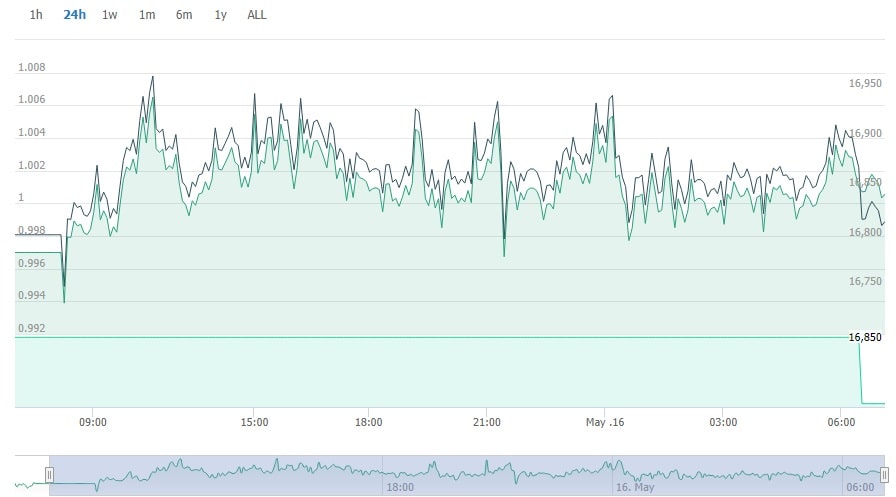
USDT is designed to trade close to one US dollar, but it does not trade at exactly $1 at every moment on every exchange. Its market price is affected by buying and selling pressure, available liquidity, exchange conditions, and confidence in the token’s reserve and redemption arrangements.
For example, USDT may trade at $0.99 or $1.01 on a particular market. Small deviations can occur during normal trading. Larger deviations may indicate unusual demand, limited liquidity, disruption at an exchange, or concerns about the issuer or redemption process.
What can cause USDT to trade below $1?
- Heavy selling: If many traders want to sell USDT at once, the market price may fall.
- Liquidity problems: Thin order books or disruptions on a particular exchange can cause a temporary discount.
- Confidence concerns: Questions about reserves, access to redemption, or the issuer’s operations can affect demand.
- Transfer or banking disruptions: Problems connecting cryptocurrency markets to traditional payment systems may make it harder for traders to restore the peg through arbitrage.
What can cause USDT to trade above $1?
Demand can exceed readily available supply during periods of market stress, in locations with limited access to dollars, or when traders urgently need USDT for transfers or trading. In those conditions, buyers may pay more than one dollar per token.
A price above $1 does not necessarily mean the token is a better investment. The premium can disappear, and the cost of buying or selling may include trading fees and spreads.
How Does Tether Make Money?
Tether’s business model is different from that of a cryptocurrency exchange. Its financial results can be influenced by the assets held in its reserves, the yields those assets generate, and other business activities.
Income from reserve assets
Reserve assets may generate income depending on their composition and prevailing financial conditions. For example, short-term government securities and certain other financial instruments can produce interest or returns.
The actual results depend on the assets held, their yields, expenses, and the company’s financial position. It would be inaccurate to assume that all reserves consist of ordinary bank deposits or that reserve income is fixed.
Issuance, redemption, and service fees
Tether publishes fees and minimums for certain direct purchases and redemptions. These terms may change and apply under specific conditions. Many retail users buy and sell USDT on exchanges, where trading and withdrawal fees are determined by the service they use.
How Tether differs from an exchange
Tether issues and administers USDT, while an exchange provides a marketplace where customers can trade digital assets. The issuer and an exchange should not be treated as identical services. Users should check the rules, fees, custody arrangements, and risks of each service separately.
Controversies and Transparency Concerns
Tether has faced public scrutiny over its reserves, disclosures, and role in the wider cryptocurrency market. These issues are important when assessing any stablecoin because confidence in the reserve and redemption mechanism helps support its intended value.
In 2019, the New York Attorney General’s office brought proceedings involving Bitfinex and Tether concerning the handling and disclosure of funds connected to Bitfinex. The case resulted in a settlement in 2021. These historical proceedings should be described in their proper context rather than treated as proof of every later claim about the company’s reserves.
Tether has also faced debate about whether its issuance affects cryptocurrency prices. Claims about market manipulation or a direct causal relationship between USDT issuance and Bitcoin price movements should be evaluated against the specific evidence presented. Correlation alone does not establish that new stablecoin issuance caused a price increase.
When assessing Tether today, focus on verifiable information:
- Read the latest reserve disclosures and note their reporting dates.
- Understand the difference between an independent assurance report and a full financial-statement audit.
- Check the legal terms that govern issuance, redemption, and account eligibility.
- Review announcements about supported networks and changes to services.
- Consider the risk of relying on a single issuer for a large portion of your digital assets.
Key Risks of Holding USDT
USDT may be useful, but a dollar peg does not make it risk-free. Before holding a substantial amount, consider the following risks.
1. Depegging risk
The market price can move away from $1. A holder who sells during a discount may receive less than one dollar per token, before fees. A temporary market deviation can also become more serious if confidence or liquidity deteriorates.
2. Reserve and issuer risk
USDT depends on the issuer’s reserves, operations, and ability to meet its obligations under the applicable terms. Reserve disclosures provide information about the reported financial position, but they do not eliminate all uncertainty about asset quality, liquidity, or future conditions.
3. Redemption limitations
Direct redemption with Tether is subject to verification, eligibility, minimum amounts, and fees. Many retail users instead depend on exchanges or other counterparties to convert USDT into local currency or dollars. Those services may suspend withdrawals, impose limits, or become unavailable.
4. Exchange and custody risk
An exchange may suffer a security incident, become insolvent, freeze an account, or suspend withdrawals. If you keep USDT on a platform, you are exposed to that platform’s operational and financial risks.
5. Blockchain and transfer risk
Sending tokens through an unsupported network, using the wrong address, or interacting with a malicious smart contract can result in loss. Blockchain transfers are generally difficult or impossible to reverse.
6. Regulatory risk
Rules governing stablecoins, exchanges, and cross-border transfers vary by jurisdiction and can change. A token or service available in one country may be restricted in another. Users should check the applicable rules and service availability in their own location.
7. Privacy and compliance risk
Public blockchain transactions may be visible to anyone using a block explorer. In addition, centralized issuers and service providers may have compliance obligations that can affect certain addresses or accounts. Do not assume that USDT transfers are private or immune to restrictions.
8. Concentration risk
Holding a large portion of your digital assets in one stablecoin, exchange, or wallet provider can create concentration risk. Even if the token is designed to remain stable, problems affecting its issuer, reserve arrangements, or the platform holding it may affect access to your funds.
USDT Compared With Other Stablecoins
USDT is one of several stablecoins designed to track the value of a currency. When comparing alternatives, consider more than the advertised price target.
- Reserve model: Understand which assets support the token and how the issuer reports them.
- Redemption access: Check who can redeem directly, what minimums apply, and what fees are charged.
- Network support: Compare the chains available to you and their associated transaction costs.
- Liquidity: Review trading activity and the availability of markets in your preferred currency.
- Issuer and regulatory structure: Understand who administers the token and which rules apply.
- Transparency: Review reserve reports, reporting frequency, and the scope of independent assurance.
For further reading, explore Poolyab’s guides to stablecoins and the risks of stablecoins.
Frequently Asked Questions About Tether (USDT)
Is USDT always worth exactly one US dollar?
No. USDT is designed to track the US dollar, but its market price can fluctuate above or below $1. The price available to you also depends on the exchange, trading pair, liquidity, and fees.
Is USDT the same as money in a bank account?
No. USDT is a digital token issued by a private company. It is not a US government-issued dollar and does not carry the same legal status or deposit-insurance protections as an eligible bank deposit.
What backs Tether?
Tether reports that USDT is backed by reserves that include cash, cash equivalents, US Treasury bills, and other assets. Review its latest reserve disclosures for the reported composition and date. Do not assume that every token corresponds to a dollar held in an ordinary bank account.
Can I redeem USDT directly with Tether?
Direct redemption is subject to Tether’s terms, account verification, eligibility rules, minimum amounts, and fees. Many retail users obtain or sell USDT through cryptocurrency exchanges and other supported services instead.
Which wallets support USDT?
A number of software and hardware wallets support USDT, but support depends on the specific network and token version. Confirm the wallet’s current network support before transferring funds.
Can I send USDT from Ethereum to Tron?
Not as an ordinary direct transfer between incompatible networks. The sending and receiving services must support the same network and token version. Use a supported transfer or bridge service only after carefully checking its requirements and risks.
Can USDT lose its dollar peg?
Yes. Market conditions, liquidity problems, issuer concerns, or difficulties accessing redemption can cause USDT to trade below or above its intended dollar value.
Is USDT a safe investment?
USDT generally has less direct price volatility than cryptocurrencies such as Bitcoin, but it is not risk-free. Users remain exposed to depegging, issuer, reserve, custody, network, and regulatory risks. Whether it is appropriate depends on the user’s needs and risk tolerance.
Conclusion: Is Tether (USDT) Worth Using?
Tether (USDT) is a widely used stablecoin designed to track the value of one US dollar. It allows users to transfer a dollar-linked token across supported blockchain networks and is commonly used for trading, payments, and moving funds between platforms.
However, USDT is not identical to cash in a bank account, and its price is not guaranteed to remain exactly $1. Its reliability depends on the issuer’s reserves, redemption arrangements, market liquidity, and the services and networks users rely on.
Before buying or transferring USDT, check the issuer’s latest reserve disclosures, applicable redemption terms, service-provider fees, and supported blockchain network. Use secure wallet practices and avoid holding more in a single stablecoin or service than you can afford to have exposed to its risks.


